Flickering lights are one of those problems that’s easy to ignore — until you realize it might not be a bulb issue at all. Sometimes it’s a two-minute fix. Sometimes it’s your home telling you that something behind the walls needs professional attention before it becomes a safety hazard.
The difference between the two isn’t always obvious, which is why most homeowners either overreact to a loose bulb or underreact to a wiring problem. Here’s how to work through it logically — starting with the easy stuff and escalating to the causes that require a licensed electrician.
Start With the Bulb
Before you assume anything serious, check the simplest explanation first.
Loose Bulb
This is the most common cause of a single flickering light and the easiest to fix. Turn the light off, let the bulb cool, and screw it back in until it’s snug. If the socket is the type that uses a pin base instead of a screw, make sure it’s fully seated. A bulb that’s even slightly loose loses consistent contact with the socket, and inconsistent contact means intermittent flicker.
Failing or Defective Bulb
Bulbs wear out, and sometimes new ones are defective out of the box. Swap the flickering bulb with one you know works from another fixture. If the flicker goes away, the original bulb was the problem. Replace it and move on.
Incompatible Dimmer Switch
This one catches a lot of people. If you’ve installed LED bulbs on an older dimmer switch designed for incandescent bulbs, flickering is almost guaranteed. Traditional dimmers regulate power by reducing voltage, which works fine for incandescent bulbs but causes LEDs to strobe or flicker because they draw power differently. The fix is replacing the dimmer with one rated specifically for LED bulbs. This is a straightforward swap that most homeowners with basic comfort around a screwdriver and a circuit breaker can handle — but if you’re not confident working with a switch, it’s a fair reason to call an electrician.
When the Problem Is Bigger Than the Bulb
If you’ve ruled out the bulb and the flicker persists — or if multiple lights in the house are flickering — the cause is somewhere in your electrical system, and the stakes go up.
Overloaded Circuit
If your lights dim or flicker when a large appliance kicks on — the air conditioner, the microwave, a space heater, a hair dryer — the appliance is pulling a surge of power from a circuit that’s shared with your lighting. A brief, momentary dim when the compressor starts is normal. If it’s pronounced, lasts more than a second or two, or happens repeatedly, the circuit is carrying more load than it was designed for.
The fix is usually a dedicated circuit for the high-draw appliance, which means running new wire from the panel to that outlet. That’s an electrician’s job — it requires working in the panel, running cable through walls, and pulling a permit in most jurisdictions.
Loose Wiring or Connections
This is where flickering lights stop being an annoyance and start being a fire hazard. Wiring connections loosen over time due to heat cycling, vibration, and age. A loose connection creates resistance, resistance generates heat, and heat at an electrical connection point is exactly how house fires start.
The warning signs: flickering that’s intermittent and random, not tied to a specific switch or appliance. Flickering that gets worse over time. A light that works fine for a while and then starts acting up again. You cannot diagnose or fix loose connections yourself — they’re inside junction boxes, behind outlets, and in places that require a licensed electrician to safely access and repair. Do not ignore this one.
Faulty Switch or Outlet
If a light only flickers when you use a specific switch, the switch itself may be failing. Internal contacts wear out, especially on switches that have been toggled thousands of times over decades. You might also feel a slight warmth on the switch plate or hear a faint buzzing. A warm or buzzing switch is not normal — it means the contacts are arcing internally. An electrician can replace the switch in minutes, but diagnosing whether the issue is the switch or the wiring behind it is why this isn’t a recommended DIY job.
The Causes Most People Miss
These are the deeper issues that most flickering-lights articles gloss over — and they’re the ones most relevant to older homes.
Aluminum Wiring
Homes built between roughly 1965 and 1975 were frequently wired with aluminum instead of copper during a period when copper prices were high. Aluminum conducts electricity adequately, but it behaves differently than copper over time in ways that create serious problems. It expands and contracts more with heat, which loosens connections at outlets, switches, and junction boxes gradually over years. It oxidizes at connection points, building up resistance. That resistance generates heat, and the cycle accelerates.
Flickering lights are one of the earliest warning signs of aluminum wiring problems. Other signs include outlet or switch plates that feel warm to the touch, circuits that stop working intermittently, and the smell of burning plastic near electrical points. According to research cited by the U.S. Consumer Product Safety Commission, homes with aluminum wiring are significantly more likely to develop fire-hazard conditions at connection points than homes wired with copper.
If your home was built in that era and you’re experiencing flickering, an electrician can confirm whether you have aluminum wiring and recommend remediation — either full rewiring or, in some cases, approved connectors that safely transition aluminum to copper at each connection point.
Outdated Electrical Panel
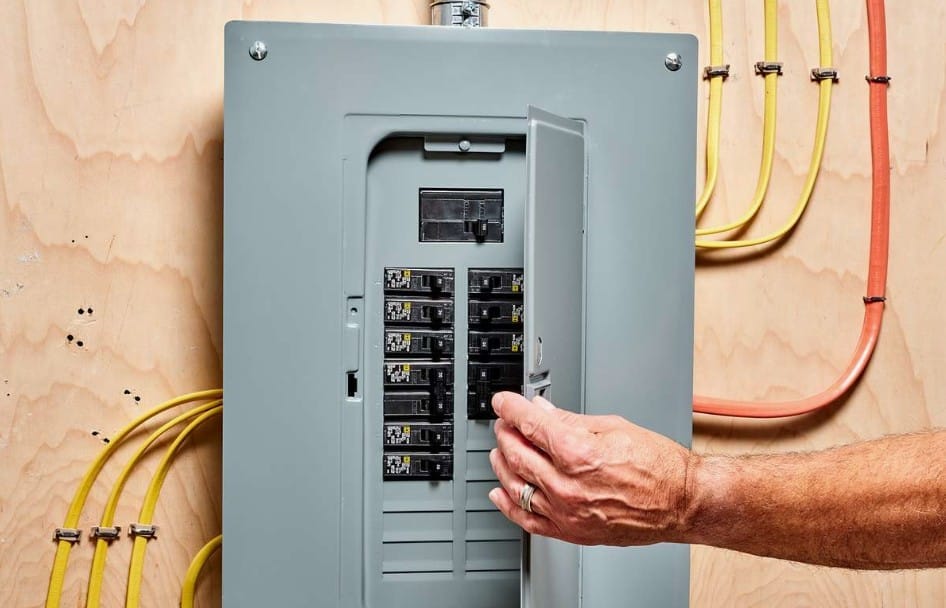
If your home still runs on a panel that’s 30 or more years old — or worse, an original fuse box — the panel itself may be the bottleneck. Older panels weren’t designed for the electrical load a modern household puts on them. When they can’t distribute power cleanly, flickering and tripping are the first symptoms. Panel upgrades are a significant job, but they’re also one of the most impactful electrical improvements you can make to an older home — for safety, capacity, and insurance purposes.
Utility-Side Issues
Sometimes the problem isn’t in your house at all. If your neighbors are experiencing the same flickering, the issue is likely on the utility company’s side — a failing transformer, overloaded grid during peak usage, or maintenance work on the distribution line. Contact your utility provider to report it. If they confirm their equipment is functioning normally, the issue is internal to your home and you’re back to calling an electrician.
The DIY Ceiling — When to Call an Electrician
You can tighten a bulb, swap in a new one, and replace a dimmer switch if you’re comfortable with basic electrical work. Those are the legitimate DIY fixes and they resolve the problem more often than most people expect.
But the moment flickering involves multiple fixtures, happens randomly without a clear trigger, persists after you’ve ruled out the bulb, or is accompanied by warmth, buzzing, or burning smell at any switch or outlet — you’ve crossed the line into work that requires a licensed professional. Loose connections, overloaded circuits, aluminum wiring, and panel issues are all fire risks that get worse the longer they go unaddressed.
The cost of an electrician’s diagnostic visit is measured in the hundreds. The cost of an electrical fire is measured in everything else.
How to Find an Electrician You Can Trust
Electrical work is the trade where credentials matter most and the consequences of bad work are the most severe. An electrician needs to hold an active state license, carry general liability and workers’ comp insurance, and have a track record of consistent quality confirmed by homeowners with similar jobs — not just a license number and a low bid.
TheProGuide lets you compare electricians using community reviews from homeowners who’ve hired them and professional screening for licensing, insurance, and service reputation. You can see who your neighbors trust before you let anyone open a panel in your home.